
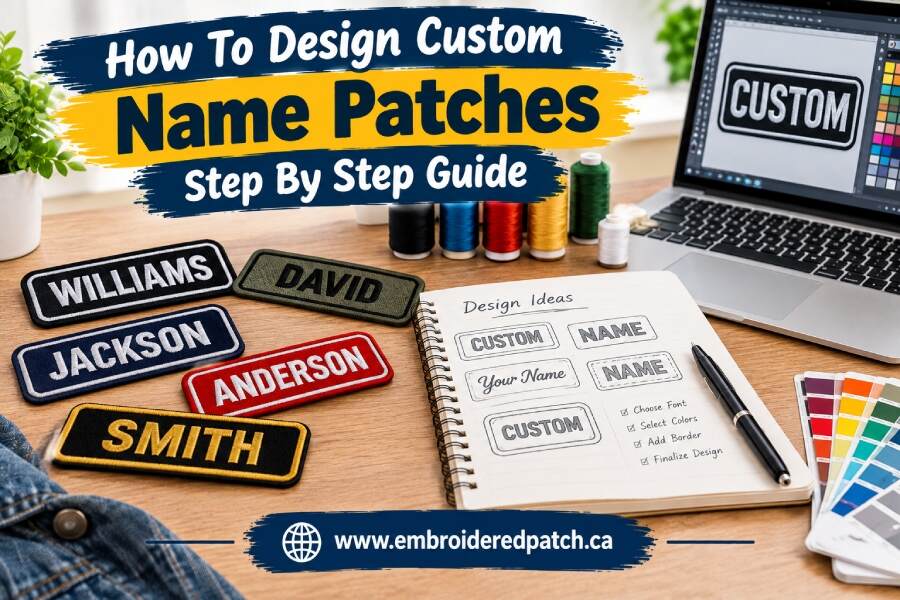
How To Design Custom Name Patches Step By Step Guide
Find out how to create your own custom name patches using an easy and straightforward approach, right from letter choices and color selection to the choice of material, size, shape, and backing.
Transitioning Artwork For A Custom Name Patch Into Stitched Reality
While a name patch may be small in size, with the right design it will add personalization, organization, and professionalism to the attire. A name, appropriate font, good color balance, and proper patch size will transform an ordinary piece of fabric into a useful item for uniforms, jackets, bags, or work clothing.
Nevertheless, designing a patch is not only about putting a name on some background; all the details influence the result. Each decision related to the writing choice, patch shape, and backing should be intentional.
An easy design process enables one to develop a design that looks clean, clear, and easily blends into the fabric that it is going to be sewn on.
Start With The Name And Purpose
The first step is to choose what exactly should be written on the patch. It could be either someone’s complete name, first name, title, group name, department, or any other identifier. Clear wording will help avoid making the design too cluttered.
Purpose will also influence the design. The patch for work should look more formal than one intended for use on a personal jacket. Knowing the purpose of the patch from the start will help create a design direction.
Choose A Font That Is Easy To Read
Fonts can make an entirely different look for a name patch. Fonts may look good in computerized format but may turn out to be hard to read once they are stitched. Simple fonts are usually a better idea for name patches.
Letter spacing should be considered. Letters should not be too close to each other because the name will look crowded. It is always important to find a good font with sufficient letter spacing.
Pick Colors That Create Clear Contrast
The colors must allow for clear visibility of the name. Combining a dark background and light lettering or a light background and dark lettering would ensure high contrast and easy readability of the name.
Colors may relate to the color of the fabric, company logo, or branding. Using many colors would make the patch look overcrowded. Using a single background color and a maximum of two thread colors would result in a better-designed patch.
Prepare Artwork For Clean Stitching
After making the major design decisions, it is necessary to prepare the artwork for the embroidery process. The digital design should be checked and approved regarding its wording, color scheme, size, shape, and position before the embroidery process starts.
While designing custom embroidery patches, the artwork preparation step becomes very crucial since the thread would not be able to capture all those tiny details. Some details might have to be modified, scaled up, or even removed to ensure the clarity of the patch.
Set A Size That Fits The Garment
The size of the patch should be big enough that the name is legible but not too big. This would depend on where the patch is going to be used.
Chest patches, arm patches, hat patches, and back patches can all have varying sizes. The bigger the name, the bigger the size it will require. It is recommended that the patch design be reviewed in full size before producing it, not just in large digital size.
Select The Right Patch Shape
The form must complement the name rather than distract from it. Rectangular and rounded rectangles are good options since they give sufficient room for names and lettering.
Another possible form may be chosen if it fits the overall layout. A shield, circle, or even a unique form may be suitable for organizations, groups, or branded apparel. The important thing is to give enough room between the letters so that the name is not seen as being cramped along the edges.
Add Personal Details Without Overcrowding
Personalization can increase the uniqueness of a name patch, but every little bit must have some reason for being there. A little emblem, border, logo, or graphic may help complete the design, provided that there is enough room.
Customized name patches can be designed according to a person’s function, affiliation, team, or even personality. The name should always remain the most recognizable component in the entire design. Additional information must complement the design without overshadowing the letters.
Choose Materials That Match The Intended Use
The type of patch material may also play a significant role in affecting the look and wear-and-tear resistance of the completed patch name. Some common patch materials include twill, felt, fabric, and other similar options.
While a work uniform demands a functional material, a jacket patch used for decoration can have an aesthetic aspect. The choice of material will also depend on the colors of threads that will be used in making the name visible.
Select A Backing That Makes Application Easier
The backing dictates how the final patch will be attached. The sew-on backing makes a good selection if the patch will be used on uniforms, jackets, and other clothing items that get worn regularly. Iron-on backing can provide a simpler application for suitable fabrics.
The hook-and-loop backing is a good option if you have to change the name tag. The selection must be made depending on the material of your clothes, their purpose, and the frequency of changing the patch.
Keep Multiple Uniform Patches Consistent
When creating multiple name patches for a team, school, workplace, or any other organization, a certain level of consistency will help achieve a neat look.
Organizations opting for uniform patches Canada should maintain consistency in the design, as it will be useful for making the various names appear as an integral part of one uniform series. By keeping the arrangement and colors constant and simply replacing the names, each patch becomes distinct, and the whole set looks professional.
Helpful Answers About Custom Name Patches
What size should a name patch be?
It depends on the garment and the length of the name. The right size should leave enough space for readable lettering and fit into the designated area. Measuring the design in its true size will give you an idea of the correct dimensions.
What font should I use for my name patches?
Clean fonts are always better since they tend to be easy to read when embroidered. Fonts with fine lines, tight letters, and excess decorations will become unclear during embroidery. You should choose a font suitable for your patch size and use.
What kind of backing should I use for uniforms?
Sew-on backing is a good choice since it will give you a strong attachment for uniform garments. Nevertheless, the best type of backing will depend on the fabric of the garment, size of the patch, need for frequent washings, and future removal of the patch.
Can name patches have logos?
Yes, as long as space allows, you can add a tiny logo or graphic. The name must be the central theme, whereas the logo must enhance the entire patch design. Simplicity will avoid cluttering the patch with graphics.
Can one design fit several names?
Yes, you can create a consistent template and modify it with different names. Matching fonts, colors, shapes, borders, and sizes can help several patches look uniform and display individual information at the same time.
Conclusion
Creating a name patch will be much more convenient if you know what is supposed to be achieved at every stage of the process. Your name must be legible, while other elements such as type, colors, size, shape, material, and background should be combined to produce a harmonious effect.
Before proceeding with the production of the patches, the artwork needs to be reviewed. The design should be compatible with the fabric as well as the intended purpose.
With the exclusion of unnecessary designs and the incorporation of lettering and practical considerations, the resulting name patch would look professional and recognizable.
A straightforward design process ensures that an ordinary name is transformed into an elegant patch that blends seamlessly onto clothes, uniforms, bags, and other cloth products.

I am a creative blog writer at EmbroideredPatch.ca, where I share the blogs about expert insights, design tips, and the latest trends in custom patches and promotional branding. Our goal is to help businesses, clubs, and individuals turn their ideas into high-quality embroidered creations. Our content is written to uncover behind-the-scenes production knowledge, highlight expert design techniques, and share practical tips that help you create patches with confidence and creativity.