
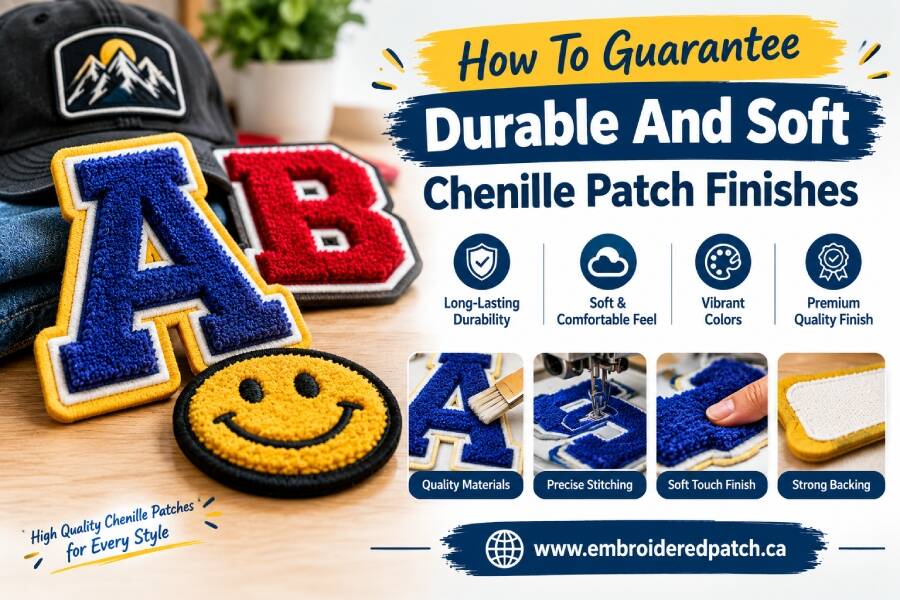
How To Guarantee Durable And Soft Chenille Patch Finishes
Learn the essential processes for making high-quality, soft yet durable chenille patches. From choosing good materials to correct finishing processes, learn how each factor helps to enhance the quality of your patch.
The Right Way To Make Soft Chenille Patches With Durable Finishing
A chenille patch needs to look and feel great. The soft and textured nature of the patch is one of the key reasons why consumers purchase this type of patch for their jackets, varsity wear, sportswear, handbags, and uniforms.
However, no matter how soft a finish it may provide, it will mean nothing if the patch falls apart, sheds fibers, or gets damaged with everyday wear and tear.
The yarn used, the backing, stitching, finishing of the edges, and attachment methods all contribute to the outcome. A bit of knowledge can go a long way when creating patches that not only feel great and look nice but also stay attractive for longer periods of time.
Start With Quality Materials For A Softer Finish
The type of materials that go into making a chenille patch has a big impact on how it feels and looks. The chenille yarn should be soft and uniform in texture to create an impression of thickness in the final product.
The backing of the chenille patch must also offer sufficient support but without making the patch stiff. When the two combine in harmony, it results in a patch that holds itself in place and, at the same time, maintains its unique softness.
Those searching for embroidered patches online should study the information about the materials and finishes to learn what they will get when they make their purchase to avoid making the wrong decision.
Select Yarn That Holds Its Texture
The yarn forms the surface of the chenille patch; therefore, its quality cannot be disregarded. Quality yarn will give an even and consistent pile of the design.
Low-quality yarns will result in a thin and inconsistent surface; it might also quickly lose its softness due to frequent handling. Selecting an appropriate yarn makes it easier to preserve the texture of the patch.
The color of the yarn must also be kept constant in the pattern. An even surface will lend more strength to the letters, numbers, and shapes.
Keep The Design Simple For Better Texture
The chenille patches look especially good with large, bold shapes, letters, numbers, and other symbols. Fine details can sometimes be hard to achieve due to the thickness of the raised threads.
A proper layout will provide sufficient room for all elements of the design. The distance between letters should not be too little, and thin lines should be avoided when they may become hidden within the pile.
Simplifying the artwork does not take away the charm of the patch; rather, it ensures that the visual effect is dominated by the soft chenille fabric texture without compromising the design’s readability.
Work With Production Specialists For Consistent Results
Soft chenille patch production involves several intricate details. There should be harmony among all of them, like design, yarn, backing, edge treatment, and embroidery.
Professional chenille patches services can help in managing these production processes as well as ensuring consistency in individual and bulk orders of chenille patch designs. This can be useful when a certain design requires several identical color, shape, and size reproductions.
Consistency in the process is important so that all the patches have a similar feel and appearance. At the same time, there will be fewer variations when using them as part of a team uniform.
Use Strong Stitching Without Making It Stiff
The sewing technique should keep the patch together and also add to the design without reducing the softness of the patch. The sewing technique should not be too thick for the patch.
Use strong stitches along the edges to prevent any fraying of the patch. This will also maintain the patch shape. In addition, the central chenille section must remain soft to give the patch its unique softness.
Balanced manufacturing ensures that the patch stays safe but does not become too stiff. This is particularly essential in patches that are sewn into clothes and should be flexible while worn.
Choose A Backing That Supports Everyday Use
The backing acts as a source of support, and in addition, it determines how the patch will be affixed to the clothing. The sew-on backing is normally ideal for clothing that is used often since it offers a more secure fixing. The iron-on backing could be appropriate for clothing when the material is heat-resistant.
The backing should be chosen based on the clothing and how the item will be used. Using the right type could reduce lifting or damage along the edges of the patch.
Use Chenille Patches For Sportswear And Team Identity
The chenille patches are highly regarded in sportswear because of the three-dimensional look that makes them visually appealing. Large letters representing teams, numerals representing players, initials of schools, and other basic shapes could be good designs on chenille patches.
When ordering jersey patches Canada, selecting the right type of chenille finishing will make it look very traditional and stylish. Make sure that the patch goes well with the jersey material, and that it is also comfortable to wear.
A uniform patch design will also provide a more organized appearance to the entire team. The same color scheme, typeface, and placement will make the jerseys look similar.
Clear Guidance On Achieving Durable Chenille Finishes
How can chenille patches retain their softness?
Chenille patches can remain soft through the use of appropriate yarn and the manufacture of the patch without any heavy stitching or backing that could flatten the raised surface of the patch. Appropriate care, such as proper washing and handling of the patch, will prevent the patch from flattening, roughening, or being damaged from regular wear and tear.
Can chenille patches be used on jackets?
Yes, chenille patches are appropriate for jackets, especially varsity jackets, denim jackets, and other thick clothing. Their raised structure gives them an outstanding look. Appropriate backing and sewing will make the patch hold during regular wear.
Can chenille patches be washed?
Yes, chenille patches can be washed under certain conditions when they are well sewn and handled. Excessive heat and harsh washing may damage the yarn. Care of the fabric should be considered first when washing.
What makes chenille patches strong?
Several things affect the strength of the patch, such as the quality of the yarn, stitching of the edges, the appropriate backing, and the attachment method. The washing and use of the garment are also crucial in determining durability.
Could different colors be used in chenille patches?
The chenille patches can be produced using various colors of the yarns to make numbers, letters, borders, and simple designs. Proper color choices will ensure there is enough contrast to make the artwork visible.
Conclusion
Making durable yet soft chenille patches is done through proper selection and management of materials, design, stitches, backing, and maintenance. High-quality yarn assists in producing a smooth and raised surface of the patch, while edge finishing is necessary for protecting the chenille from wearing out due to normal wear.
The simpler the design of the chenille is, the better the texture will be seen, and proper backing ensures that the patch is attached firmly.
With careful consideration given to all the stages, chenille patches can retain their softness, cleanliness, and attractive look for a longer period of time.

I am a creative blog writer at EmbroideredPatch.ca, where I share the blogs about expert insights, design tips, and the latest trends in custom patches and promotional branding. Our goal is to help businesses, clubs, and individuals turn their ideas into high-quality embroidered creations. Our content is written to uncover behind-the-scenes production knowledge, highlight expert design techniques, and share practical tips that help you create patches with confidence and creativity.