
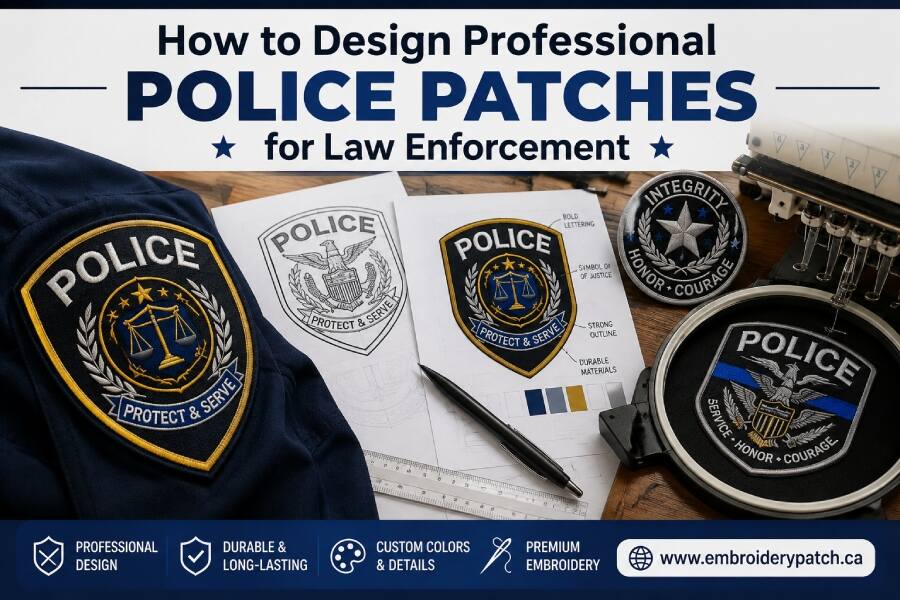
How to Design Professional Police Patches for Law Enforcement
A police patch represents a department and communicates authority before a single word is spoken. It becomes a part of an agency’s identity for years when it’s worn during daily duties or specialist operations.
This is the reason designing police patches involves much more than choosing attractive colours or adding a badge shape. Every design decision during this process should balance appearance and long-term durability while respecting the traditions of the department it represents.
Keep reading to learn how you can design professional-quality patches for yourself.
Police Patch Design Process
Designing a professional police patch is a very different process, as it allows for limited creativity and focuses more on values.
Here is how you can create police patches that reflect identity and professionalism.
1. Start With the Department’s Identity
You might have noticed that a common trait of a strong police patch is that it usually tells a story.
Start by defining what the patch should represent before thinking about colours or embroidery.
Many departments draw inspiration from:
- Well-known local landmarks that represent the community
- State symbols with regional significance
- Historical events that shaped the department
- Official seals that reflect the department’s identity
- Native wildlife which is closely associated with the region
- Department mottos that highlight its values and mission
The addition of meaningful elements makes the patch feel more connected with the community that the police work for instead of just being another generic design that can be placed anywhere.
This kind of identity will also make the officer feel a stronger connection with the uniform they are wearing.
2. Keep the Design Clear and Recognizable
One characteristic that an excellent patch should have is that it must be identifiable from several feet away, meaning that the design itself must not be overly complicated.
Addition of excessive wording and intricate decorative details can appear impressive during the design stage but often lose clarity once embroidered.
Instead, you should
- Opt for bold shapes that stand out without adding unnecessary detail.
- Stick to simple line work for a more professional appearance.
- Make sure any lettering is clear and easy to read.
- Use balanced spacing so every design element has room to breathe.
Good police patch design focuses on clarity before decoration.
3. Choose Colours That Reflect Professionalism
Colour influences how a patch is perceived, and this is why most law enforcement agencies rely on combinations that communicate professionalism and authority rather than bright decorative palettes.
According to a professional police patches maker, the common colour choices include:
| Colour | Common Association |
| Navy blue | Indicates authority and trust |
| Black | Shows strength and professionalism |
| Gold | Demonstrates service and distinction |
| Silver | Highlights tradition and integrity |
| Dark green | Shows regional or state identity |
High contrast between thread and background also improves visibility, particularly when officers are viewed from a distance.
4. Select a Shape That Matches the Department
Shield-shaped patches are most commonly seen, but they aren’t the only option.
Departments can also choose from:
| Shape | Common Use |
| Shield | Used in municipal police departments |
| Round | Common in sheriff and county agencies |
| Oval | Used in specialist units |
| Custom outline | Seen in historic or regional departments |
The overall shape should complement the department’s existing visual identity while leaving enough space for important information.
5. Make Text Easy to Read
You might have noticed that police patches usually contain limited wording.
Some common examples for this include:
- Police Department
- Sheriff’s Office
- State Police
- City name
- County name
- Unit designation
Oversized lettering is known to perform better than condensed fonts packed closely together, as embroidery has physical limitations.
Your design might need further simplification if the officers cannot read the patch clearly while wearing the uniform.
6. Consider Practical Wear Conditions
Police uniforms have to experience demanding conditions in all cases.
Those daily patrols expose patches to sunlight, rain, frequent washing and constant movement. A design that looks attractive on a computer screen is not going to perform well once it is embroidered onto operational uniforms.
Choosing durable embroidery thread and high-quality backing materials helps maintain the patch’s appearance throughout regular use.
You need to remember that practical performance should always carry as much importance as visual appeal for your embroidered patches online.
7. Balance Tradition With Modern Design
Most of the law enforcement agencies have decades of history behind them. Their patches often become symbols that officers wear with pride throughout their careers.
But that doesn’t mean every design should remain unchanged forever.
Small updates can improve readability or embroidery quality while preserving the department’s heritage as well. Modernizing typography or refining colours often produces a cleaner result without compromising the original identity.
8. Choose the Right Border and Backing
The finishing details affect both appearance and durability.
Merrow borders remain one of the most common choices because they create a strong and rounded edge that protects the patch during daily wear. Satin borders are another option for more detailed or custom-shaped designs.
Attachment methods should also reflect how the patch will be used.
| Attachment | Best For | Benefit |
| Sew-on | Standard duty uniforms | Gives maximum durability |
| Hook-and-loop (Velcro) | Tactical and specialist units | Offers easy replacement |
| Hear seal | Display garments or light use | Gives quick application |
Stitched attachment generally provides the longest service life for operational uniforms.
9. Review the Design Before Production
Even experienced designers prioritize getting a final review before production begins for their hat patches.
Check that:
- lettering is readable at actual size
- symbols are accurate and properly positioned
- colours match department guidelines
- borders are even
- proportions remain balanced
Producing a stitched sample before approving a full production run also allows small adjustments to be made without replacing an entire batch.
Common Queries Answered
-
What should be the length of the police patch that I’m designing?
Most shoulder patches are between 3.5 and 4.5 inches tall, but the exact size will always depend on the uniform specifications and departmental requirements.
-
Can there be any commemorative elements added to police patches?
Yes, because some police departments manufacture special edition patches for celebrating anniversaries and important milestones without changing the standard patch.
-
How is the durability of embroidered police patches?
Good-quality embroidered patches will serve for several years even if they are washed and used on a daily basis.
Wrapping Up
A professional-quality police patch can be a very effective way of showing the connection between the department and its surrounding communities while remaining useful at the same time. All it requires is the creation of a good design coupled with quality construction processes to make sure that the patches will serve their purpose for years to come.

I am a creative blog writer at EmbroideredPatch.ca, where I share the blogs about expert insights, design tips, and the latest trends in custom patches and promotional branding. Our goal is to help businesses, clubs, and individuals turn their ideas into high-quality embroidered creations. Our content is written to uncover behind-the-scenes production knowledge, highlight expert design techniques, and share practical tips that help you create patches with confidence and creativity.