
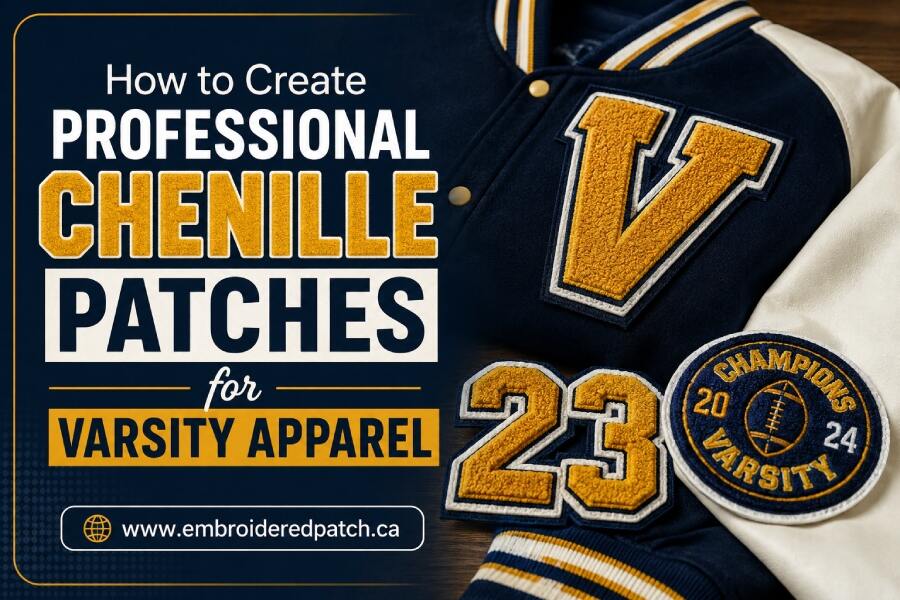
How to Create Professional Chenille Patches for Varsity Apparel
Chenille patches have a way of making a plain jacket look finished. That raised, fuzzy texture is what gives varsity apparel its signature look, whether it’s a bold letter on the chest or a mascot across the back. But not every patch that looks good on day one stays that way after a few washes or a full season of wear.
The difference usually comes down to a handful of decisions made before the patch is even sewn on. Design, backing, and how it’s applied all play a bigger role than most people expect. Here’s what actually matters if you want a patch that holds up as well as it looks.
Why Chenille Works So Well on Varsity Jackets
Chenille has a visual weight that flat embroidery just doesn’t have. The raised, looped texture catches light differently, so a letter or mascot reads clearly even from across a room or a field. That’s part of why letterman jackets have used it for decades: it’s easy to spot, easy to recognize, and it holds attention without needing bright colors or extra detail to stand out.
There’s also a practical side to it. The texture adds a bit of dimension to an otherwise flat surface, which is exactly what makes personalized chenille patches feel different from a standard embroidered logo. A name, initial, or team symbol done in chenille looks intentional rather than printed on, which is a big part of why schools and teams still default to it for jackets meant to last years, not seasons.
Does Chenille Work for Every Design?
Not quite. Chenille is at its best with bold, simple shapes since the loop texture doesn’t hold fine detail the way flat embroidery does. A thick block letter or a solid mascot outline will look sharp for years. A design with small text or thin lines tends to blur into the yarn and lose its shape fast.
That’s why most professional patches combine both techniques rather than relying on chenille alone:
- Bold shapes and letters: Chenille handles these cleanly, since there’s enough surface area for the loops to form a solid, raised outline
- Faces, fine outlines, and small text: Better suited to embroidery, which keeps the detail crisp instead of letting it get lost in texture
- Mascots and characters: This is where the two often meet, since cartoon embroidered patches usually need a chenille base for the bold outline and embroidered detail layered on top for the face or features
Knowing where one technique ends and the other begins is what separates a patch that looks sharp from one that looks like a blur of yarn.
What Actually Makes a Patch Durable
A patch’s look comes from the design, but its lifespan comes from three things most people never think about: the edge stitch, the backing, and how it’s applied. Skip any one of these, and even a well-designed patch can start fraying or peeling within a season.
| Element | What It Does |
| Chain stitch border | Locks the outer edge and keeps loose chenille loops from unraveling over time |
| Backing type | Sew-on holds up better on large back patches, since heavy chenille can sag with iron-on backing alone |
| Heat press application | Correct temperature and press time (with a second pass on the inside) lets the adhesive fully bond to the fabric instead of sitting on the surface |
Get these three right, and you end up with durable and soft chenille patches that hold their shape wash after wash, instead of ones that look good for a month and then start coming apart at the edges.
DIY at Home vs Ordering Custom
Making a chenille patch at home is doable for a one-off project, like a single jacket for personal use. A basic sewing machine, felt, and chenille yarn can get you a patch that looks decent, as long as the design stays simple.
Where DIY starts to fall short is bulk orders, tight deadlines, or designs that need precision, like matching team logos across dozens of jackets.
Where a Professional Patch Maker Makes the Difference
Laser-cut edges come out cleaner and more consistent than hand-cut felt, with no fraying past the border. Digitizing accuracy also matters more than most people expect, since it’s what keeps the yarn loops forming the same uniform texture across every patch, not just the first one. Turnaround time is another factor: bulk orders get finished faster on commercial equipment than they ever would by hand.
For anyone ordering in quantity or working on a real deadline, going with custom patches CA from an experienced maker is usually the more practical route than trying to replicate it at home.
Common Mistakes to Avoid
Most patch problems trace back to a handful of avoidable choices made early on.
- Cramming too much detail into a small letter. Fine lines or extra elements inside a bold shape tend to blur once the chenille loops fill in, so the design ends up looking muddy instead of sharp.
- Using the wrong backing for the jacket weight. Iron-on backing might hold fine on a lightweight patch, but a large back piece needs sew-on backing, or it can start sagging over time.
- Skipping the chain-stitch edge. This border keeps the yarn contained. Without it, loops start working loose at the edges after a few washes.
- Rushing the heat press step. Pressing for too short a time, or skipping the second pass on the inside, means the adhesive never fully bonds, so the patch can lift at the corners within weeks.
FAQs
1. How long do chenille patches last on a varsity jacket?
With the right backing and stitching, chenille patches can last for years, even with regular wear. Sew-on backing tends to hold up longer than iron-on alone, especially on large back patches.
2. Can chenille patches be washed safely?
Yes, if the jacket is turned inside out, washed in cold water, and air-dried instead of machine-dried. Harsh detergents and high heat are what usually cause the yarn to fray or lose shape.
3. What’s the difference between chenille and embroidered patches?
Chenille uses looped yarn for a raised, fuzzy texture, while embroidery uses flat thread for crisp detail. Chenille suits bold letters and shapes; embroidery handles small text and fine lines better.
4. Is chenille or embroidery better for small logos or text?
Embroidery. Chenille’s thick yarn loops can’t hold fine detail the way flat stitching can, so small text or intricate logos tend to blur or lose clarity in chenille.
5. Is iron-on or sew-on backing better for a varsity jacket patch?
Sew-on is generally the better choice for varsity jackets, especially for large back patches, since heavy chenille can sag or lift over time with iron-on backing alone.
Final Thoughts
A great-looking patch and a durable one usually come down to the same few decisions: the right design for the technique, the right backing for the jacket, and the right process behind it. Get those right, and the patch holds up as well as it looks. Skip them, and even the best design won’t last past a season.

I am a creative blog writer at EmbroideredPatch.ca, where I share the blogs about expert insights, design tips, and the latest trends in custom patches and promotional branding. Our goal is to help businesses, clubs, and individuals turn their ideas into high-quality embroidered creations. Our content is written to uncover behind-the-scenes production knowledge, highlight expert design techniques, and share practical tips that help you create patches with confidence and creativity.