
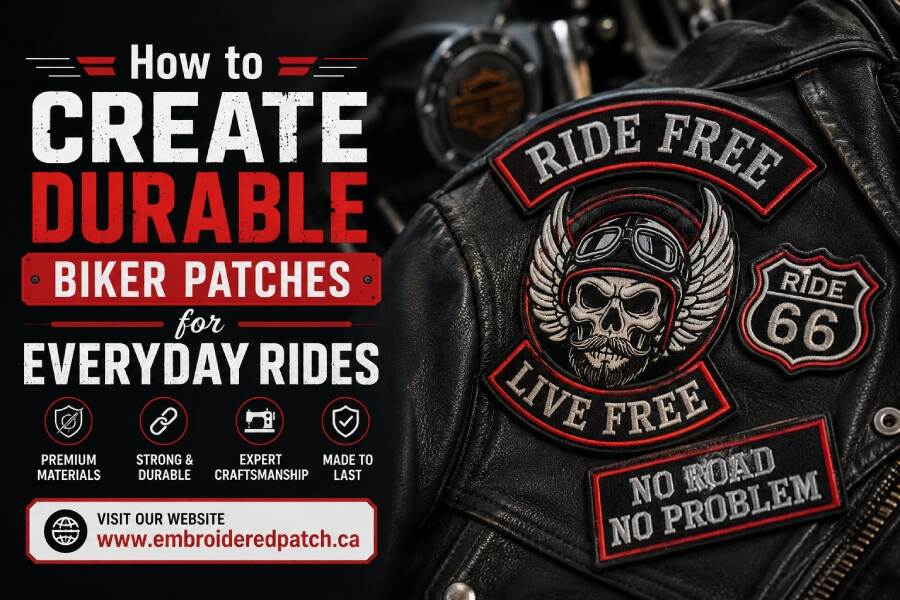
How to Create Durable Biker Patches for Everyday Rides
How do top riders design durable, weather-proof biker patches for their everyday motorcycle clothes? The blend of tight-threaded material, water-resistant fabric, and heavy-duty stitching ensures your patch is safe from wind, water, and road damage.
Maintain Your Patches For Long-Term Performance
A biker patch can be a perfect fit the first time it’s applied to a biker’s jacket. Now it’s time for the real test.
Rain hits it. Road dust accumulates in the threads. The jacket is twisted as you ride, packed in a bag, and washed again. Over the months of treatment, a substandard patch might begin to fade, fray, or pull up at the edges.
A good patch should not only be aesthetically pleasing for the product shot, but it should be effective in real life as well.
Fortunately, there is nothing mysterious about durability. Quality of patch material, stitching, backing, application, and care affect how long a patch will last for daily riding. Here’s how to make better decisions at the outset.
Choose Materials That Handle Daily Road Wear
The material is a part of a lasting patch.
Embroidered designs are particularly suitable for everyday motorcycle use as it adds texture and depth to the surface while providing visual interest and character to the design.
That thread, however, needs to be a good one. Generally, stronger polyester threads are more suitable for repeated washing and heat, and for repeated use over a long period of time, than more delicate types of thread.
Embroidered patches Canada are a great option for riders to customize jackets, vests, and other riding apparel with a personal touch and meaning.
These patches are made with high-quality materials and strong stitching, ensuring they can withstand regular use while still maintaining their details and clarity. They’re the perfect way to display club logos, individual style, memorable rides, or special symbols.
Use Strong Stitching To Prevent Early Damage
No matter how good a patch is, it cannot work correctly if it is not put on the correct way.
Sewing is a more durable solution for jackets used frequently for riding. Sew-on patches are especially recommended for workwear, uniforms, and outdoor clothing as they endure washing and stress.
Strong edge stitching on personalized biker patches provides the design a cleaner, polished appearance. It keeps the patch flat and prevents it from hanging on bags, gloves, or other equipment.
The aim is to get the patch as quickly as possible before normal riding puts it to the test.
Select The Right Backing For Your Jacket
The backing is used to adhere the patch to your clothes, so you need to select the appropriate backing.
For jackets that are worn a lot, sewn-on backing is a good option. Iron-on backing may be useful for certain fabrics that are used for stability and for casual clothing, but over time, the adhesive may fail when exposed to heat, washing, and regular wear and tear.
In some cases, when you want to take off or swap patches, you can use a hook-and-loop backing. It’s a great option for those who frequently switch designs or prefer more flexibility in their setup.
Keep Details Clear Without Making Them Fragile
The design also determines the durability.
It can be hard to embroider all the tiny lettering and very thin lines. Many little features can make a design look neat on the screen, but get lost when it’s sewn onto a tiny patch.
Rather, emphasize large shapes, more legible typography, and good contrast.
Police patches Canada often require clearly visible typography and symbols, as the information in the patch needs to be communicated rapidly. The same concept goes for biker designs; sometimes it is better to have a few strong details rather than many little ones.
Protect Your Patches From Weather And Washing
A motorcycle jacket will endure what regular clothing would not. Rain, dust, sun, road dirt, and frequent movement can slowly impact the patch as well as the garment.
In the case of embroidered patches, light wash is advised. Wash the garment below 40°C and don’t use bleach or too much brushing.
Don’t wash all patched jackets as normal laundry. Designs that use an adhesive backing may be compromised by high heat and strong washing, and high temperatures may damage synthetic materials.
Maintain Your Patches For Long-Term Performance
There’s no need for a complex maintenance plan.
Rather, look out for patches periodically, especially after extended riding or wet weather. Check for any loose threads, lifted corners, frayed edges, or where the patch may begin to pull away from the jacket.
Affordable custom biker patches give riders a cost-effective way to personalize jackets, vests, and riding gear without compromising on style.
High-quality materials and durable stitching contribute to sharp-looking patches that can stand up to frequent rides, offering a practical option for individuals, clubs, and riding groups alike.
Your Biker Patch Questions Answered Clearly
-
What makes a biker patch durable?
The factors affecting durability range from quality thread, strong cloth and secure stitching, suitable backing, and the proper care given. If jackets are subject to repeated riding, it may be more reliable to use a sew-on attachment, as it is more durable for movement, washing, and repeated use than a lower-quality adhesive-only attachment.
-
Which are the superior options: sew-on patches or iron-on patches?
Sew-on patches are usually more durable and suitable for frequent, long-term use, as the sewing holds them in place physically. Iron-on patches are great for certain fabrics and lighter clothing, but over time the adhesive may begin to wear out with repeated washing and from the heat.
-
What is the best way to wash biker patches?
Use cool or low-temperature water and a gentle method to clean patched clothing. Don’t use bleach or rough brushing. Washing a garment inside out may decrease the friction from washing. Always follow the care directions that have been given for a specific patch and jacket material.
-
Will biker patches get ruined during a rain?
A good patch will last through regular rain exposure, but construction, attachment, and care will determine how long it will last. Strong stitching can be helpful in outdoor applications as it is not solely reliant on adhesive. If you get the jacket wet, let it dry out naturally, rather than leaving it in the dryer.
-
How to prevent my patch edges from lifting?
Stitch evenly and firmly around all the edges of the patch, making sure to secure the corners. Inspect edges for lifting periodically. Small loose spots can be repaired quickly, before any further separation, and will stay in place while riding normally.
Conclusion
Making long-lasting biker patches isn’t merely a matter of picking a good design. The materials, stitching, backing, detail, and care are all important in ensuring that your patch will stand up to the strict conditions of daily rides.
Choose your patch style based on the weather, fabric used for the jacket, washing habits, and how often you use it. It’s good to periodically inspect for loose threads or lifted edges before they grow into a significant problem.
A professionally designed and expertly crafted biker patch can retain its strength, durability, and significance for a lifetime of rides and serve as a powerful emblem of your identity, history, and the club you love.

I am a creative blog writer at EmbroideredPatch.ca, where I share the blogs about expert insights, design tips, and the latest trends in custom patches and promotional branding. Our goal is to help businesses, clubs, and individuals turn their ideas into high-quality embroidered creations. Our content is written to uncover behind-the-scenes production knowledge, highlight expert design techniques, and share practical tips that help you create patches with confidence and creativity.