
How to Customize Embroidered Patches for Events and Teams
A small piece of fabric, only a few inches wide, somehow still manages to steal everyone’s attention at the party. Do you realise why?
Clearly, because embroidered patches aren’t just decoration, they are conversation starters. They carry meaning, whether it is your team logo, a quirky design, or a symbol that says ‘this is who we are.’ So yes, that tiny embroidered square can actually spark curiosity.
It can make people smile or even create instant connections.
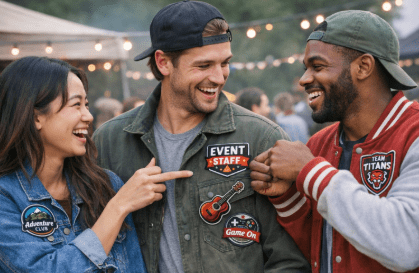
It is basically a living proof that details matter. This is your sign to customize your next event or team badge very thoughtfully. After all, patches turn ordinary outfits into statements and ordinary occasions into memorable experiences.
There’s More to Patches Than You Think
Patches are small but powerful signals of self. Look back to how they have marched through history in soldiers’ uniforms, rebels’ jackets, travellers’ bags, and everyday caps. Today, they are everywhere again, spreading across the fashion world like wildfire.
Most people assume the task of customising patches is straightforward. They think they can just go, pick a design, send it off, and get it back. But the difference between a patch that looks sharp and one that looks like an afterthought comes down to a handful of decisions most people skip entirely. Today, we are going to talk about those decisions.
1. Start With the Right Base
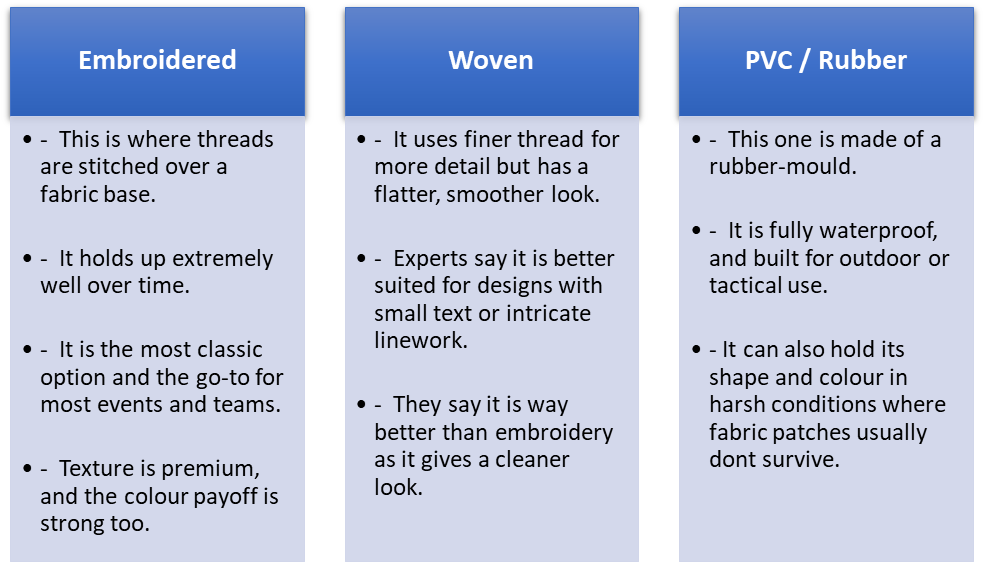
Not all patches are made the same way, and the type you choose affects everything. Including the cost, detail, durability, and especially how it looks on the final product. So, here are the three types that you can choose from.
2. Design Decisions That Make or Break the Badge
This is where most custom orders go wrong. Remember, a design that looks great on screen can lose all its detail once it is stitched.
· So, Keep It Bold and Simple
Fine lines, tiny text, and gradients, for instance, don’t translate well into thread. Hence, when designing Morale patches for yourself, stick to solid shapes.
Moreover, make sure the outlines are strong and that you use a limited colour palette. Experts suggest staying under seven colours. All this is crucial because the simpler the design, the cleaner and more recognisable the finished badge.
· Size Changes Everything
The next most important thing is that a 5cm patch can hold a logo and a name. But a 3cm patch should have only one element. If you try to squeeze more in, it would just make the final badge look crowded. So, always confirm the final size before approving a design.
3. Choosing the Right Backing
The backing determines how the patch attaches. This is the main reason why getting this wrong can result in patches that fall off, damage fabric, or just won’t stick to certain materials.
· Try Iron-On
It uses heat-activated adhesive and works well for most casual applications, such as on jackets, bags, and caps. However, it is not ideal for fabrics that can’t handle high heat or items washed very frequently. So, be careful there.
· Sew-On is Also Fine
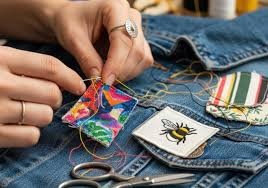
The most permanent option is sewing. It is preferred for workwear, uniforms, or anything that goes through regular heavy washing. After all, it takes more effort to apply, and hardly budges.
· Choose Velcro
This one is popular for tactical gear, team kits, and anything that needs to be swapped out or updated regularly. It works great for events where patches change daily or by role.
How Custom Embroidered Patches Work for Events?
Events are among the strongest use cases for them and, sadly, among the most underused. Now, why is that so? Let’s understand from the basics.
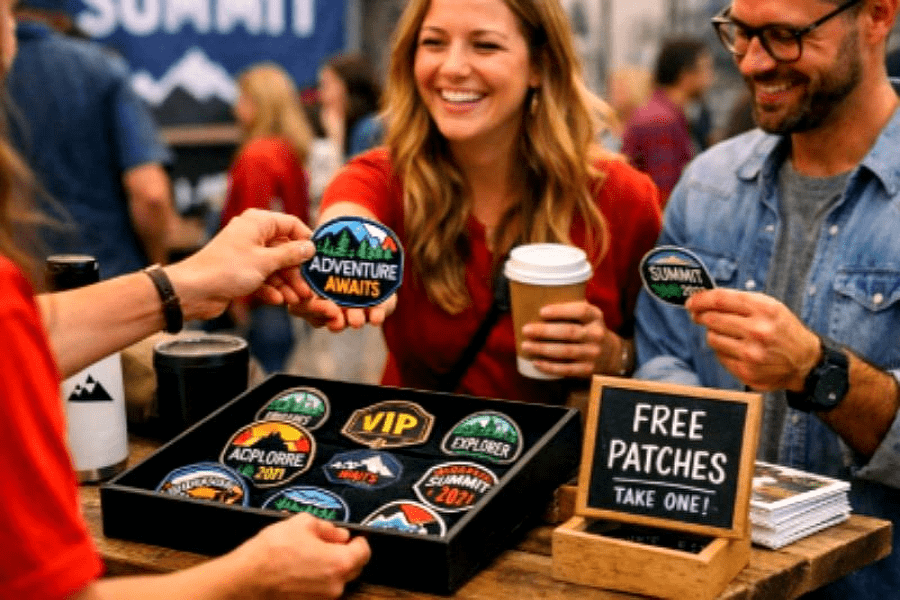
Customised embroidered patches work brilliantly as event merchandise, volunteer identifiers, speaker gifts, and team differentiators at large gatherings. They are the most amazing creations because of their low per-unit cost at scale.
Though that is not all, they are also easy to distribute, and unlike tote bags or lanyards, people actually keep them. In addition, for multi-day events, patches can be designed as collectibles. Maybe one per day, one per session, or one per team.
This kind of gamification drives engagement in a way a branded pen never will.
The Military Influence on Modern Patch Culture
Did you know these esteemed badges didn’t start in fashion? They started on uniforms. A little hard to believe, but yes, the military badge has been used since the 19th century.
They used to indicate rank, regiment, division, and tour of duty. Hence, each patch carried a specific meaning, and they would be earned, not just worn. This history is exactly why, even today, they carry a sense of identity and belonging that no other branded items do.
That cultural weight is part of why custom patches resonate so strongly in team sports, corporate culture, and community groups today.
Patches in Fashion: More Than a Trend
All in all, what started as functional identification has now become one of the most recognised visual languages globally. And the embroidered patches in the fashion industry are not even new. Think 1960s biker culture, 1970s punk, 1990s streetwear.
However, the current wave is different. Designers from luxury houses to independent labels are all using them as a storytelling tool. And don’t be fooled, it is working really well.
Why Brands Are Paying Attention
For brands and creators today, a custom patch is a wearable content piece. It gets photographed, shared, and seen by people who never even attended your event or bought your product directly. That kind of organic reach is hard to manufacture any other way.
Patch Type Comparison
| Patch Type | Best For | Detail Level | Durability |
| Embroidered | Teams, events, apparel | Medium-High | Very High |
| Woven | Fine logos, text-heavy designs | Very High | High |
| PVC / Rubber | Outdoor, tactical, waterproof use | Medium | Excellent |
| Printed | Photo-realistic designs, short runs | Very High | Medium |
| Chenille | Varsity, sports, oversized designs | Low | High |
FAQs
-
How many colours can an embroidered patch have?
Most manufacturers support up to 15 thread colours per patch, but designs with 5–7 colours tend to produce the cleanest, most readable results.
-
What’s the minimum order quantity for these badges?
It varies by supplier, but most set minimums between 25 and 100 units. You can order lower quantities, but it might cost significantly more per piece.
-
What are their most popular uses?
1. They can be placed on sports team uniforms and kits.
2. They will look perfect on corporate event merchandise.
3. They work best for staff identification.
4. There is no better collectible than them. -
How do I make sure my logo translates well into embroidery?
For an excellent result, you need to share a high-resolution vector file with your manufacturer and ask for a stitch-out sample before approving the full run.
-
What backing type is best for jackets and hoodies?
Iron-on works for casual use, but sew-on is more reliable for garments that are washed frequently. You should also ask your supplier what they recommend based on the fabric type.
Final Thought
Made-to-order badges are one of those rare things that are small in size and large in impact. However, only if done right. This is why you need to follow all the steps of the design process very carefully. Then only the badges will outlast the event, the season, or the campaign they were made for. If you have been finding the customisation process difficult, we are sure you must be using the wrong approach. Use the one shared above and thank us later.

I am a creative blog writer at EmbroideredPatch.ca, where I share the blogs about expert insights, design tips, and the latest trends in custom patches and promotional branding. Our goal is to help businesses, clubs, and individuals turn their ideas into high-quality embroidered creations. Our content is written to uncover behind-the-scenes production knowledge, highlight expert design techniques, and share practical tips that help you create patches with confidence and creativity.